As our readers know, we have been closely monitoring a case challenging the constitutionality of a New Jersey privacy law known as Daniel’s Law, which was enacted after the killing of a New Jersey federal judge’s son. Our readers may recall a recent piece in which we discussed the questions that the United States Court of Appeals for the Third Circuit (“Third Circuit”) asked New Jersey State’s highest court (“NJ Supreme Court”) to answer before it could determine whether Daniel’s Law can survive constitutional scrutiny. Well, we recently received an answer, which we discuss in greater detail below, including its future implications for Daniel’s Law.
No Mental State Requirement Under Daniel’s Law
As background, arguments concerning the constitutionality of Daniel’s Law arose in response to hundreds of Daniel’s Law lawsuits filed in early 2025 by Atlas Data Privacy Corporation (“Atlas”). After a district court judge upheld the statute on constitutional grounds, many of the defendants named in Daniel’s Law lawsuits appealed to the Third Circuit. Before the Third Circuit issued a decision, however, it asked the NJ Supreme Court to answer two questions, which the court reformulated as a single question – “[w]hat mental state, if any is required to establish liability under Daniel’s Law . . . ?”
On August 12, 2026, the NJ Supreme Court ruled that no mental state is required to establish liability for actual damages under Daniel’s Law. In its ruling, the NJ Supreme Court looked at both the plain language of the statute and the accompanying legislative history. Whereas other subsections of the statute included a mens rea requirement in order to ascribe liability, the NJ Supreme Court explained that the subsection permitting recovery of actual damages did not contain any such mental state requirement. As further support for the conclusion that there was no mens rea requirement for an award of actual damages, the NJ Supreme Court looked at the legislative amendments to Daniel’s Law. When it was enacted in 2020, the New Jersey Legislature included a mental state requirement. However, in 2022, the law was amended to remove the mental state requirement. As the NJ Supreme Court explained, “[t]hat change implies a purposeful alteration in the substance of the law and suggests that the Legislature intended for Daniel’s Law to require no specific mental state for the imposition of actual damages.”
Daniel’s Law’s Future Is on Thin Ice
When the district court upheld Daniel’s Law on constitutional grounds, the district judge explained that Daniel’s Law likely was unconstitutional if it were a strict liability statute. With the NJ Supreme Court’s ruling of August 12, 2026, this particular subsection of the law has, for all intents and purposes, been declared a strict liability statute. After the NJ Supreme Court’s decision, the Third Circuit invited the parties to submit supplemental briefing to discuss the impact of the decision on any forthcoming Third Circuit ruling by August 26, 2026.
The attorneys at Klein Moynihan Turco (“KMT”) have been at the forefront of considering Daniel’s Law claims which target companies in the consumer data marketing space. KMT regularly advises clients on compliance with Daniel’s Law, similar laws in other jurisdictions, and various other state and federal privacy laws.
If you need assistance with defending a Daniel’s Law litigation matter, please e-mail us at info@kleinmoynihan.com, or call us at (212) 246-0900.
The material contained herein is provided for informational purposes only and is not legal advice nor is it a substitute for seeking legal advice from an attorney. Each situation is unique, and you should not act or rely on any information contained herein without seeking the advice of an experienced attorney.
Attorney Advertising
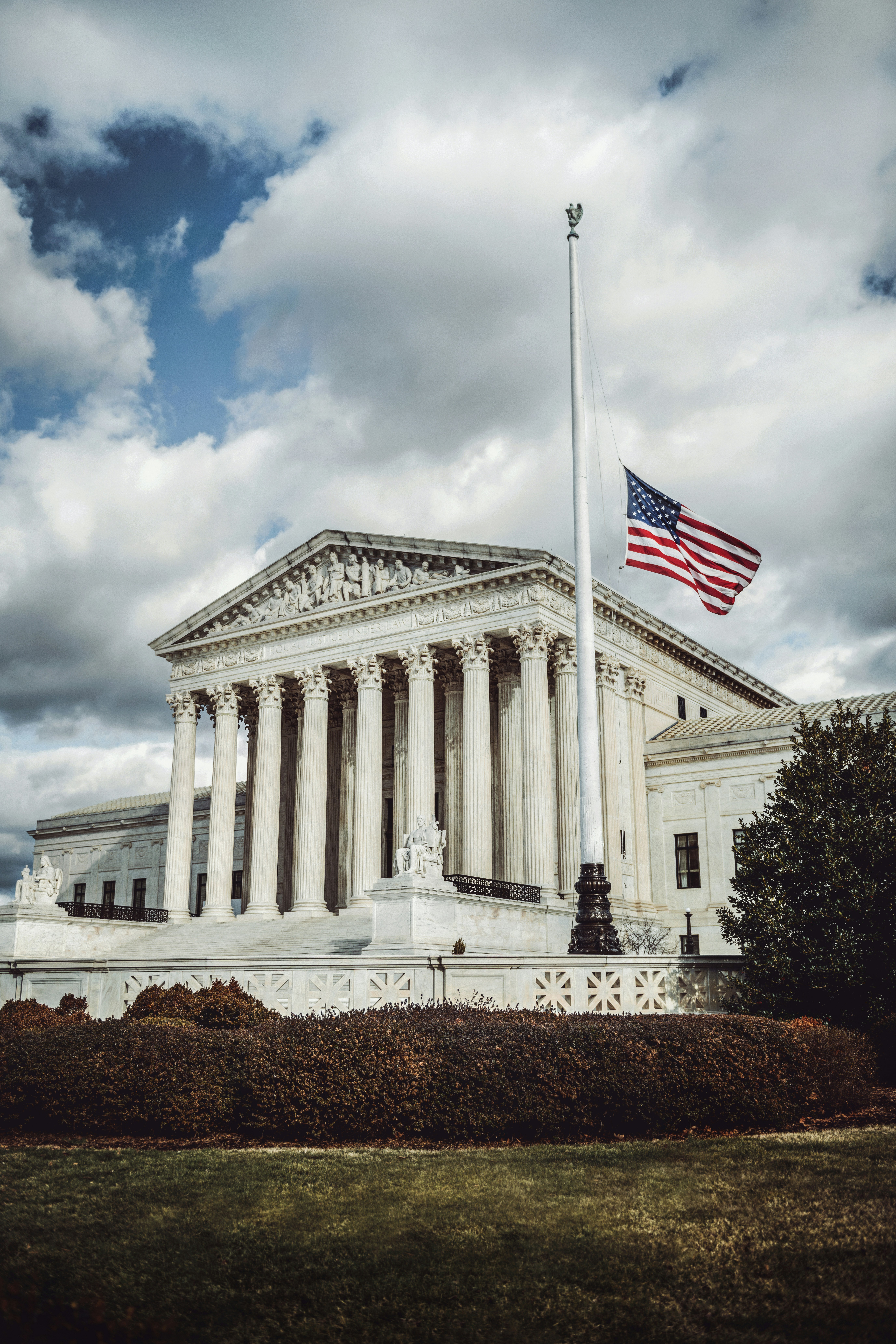
Photo by Tim Mossholder on Unsplash
Similar Blog Posts: